AI Cloud Infrastructure Performance Metrics for Trade Promotion Teams
Trade promotion managers at major consumer packaged goods companies are increasingly discovering that the performance ceiling for their promotion effectiveness analytics isn't determined by algorithmic sophistication alone—it's fundamentally constrained by the infrastructure supporting those algorithms. A 2025 industry survey of CPG trade spend leaders revealed that 68% of organizations cite infrastructure latency and data integration bottlenecks as primary barriers to real-time promotion optimization, while only 31% point to model accuracy as their main challenge. This infrastructure reality has profound implications for how category managers approach shelf space negotiation, demand forecasting, and post-promotion analysis at the scale required by national retail partnerships.
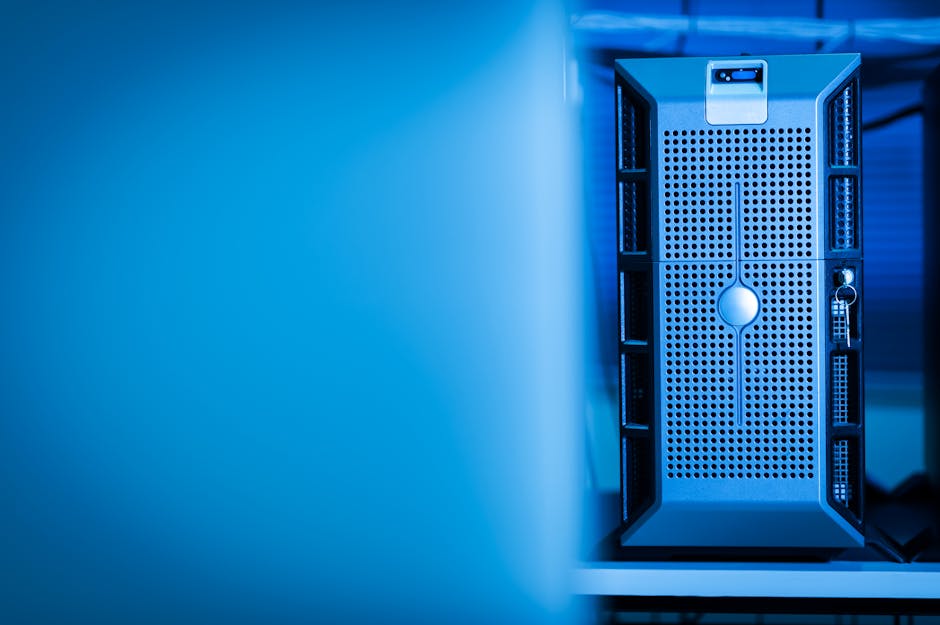
The computational demands of modern trade promotion management have evolved dramatically as companies like Procter & Gamble and Unilever process millions of SKU-retailer-timeframe combinations daily to optimize promotional cadence. AI Cloud Infrastructure has emerged as the foundational layer enabling these calculations at enterprise scale, with distributed computing architectures capable of processing promotion scenarios across 50,000+ retail locations simultaneously. Benchmark data from leading CPG organizations shows that cloud-native AI implementations achieve promotion plan generation 12-15 times faster than legacy on-premise systems, compressing what once required 72-hour batch processing cycles into near-real-time workflows that support adaptive promotion strategies during in-flight campaigns.
Quantifying Infrastructure Impact on Promotion Effectiveness Analytics
The correlation between infrastructure performance and trade promotion ROI becomes measurable when examining specific operational metrics. Organizations that migrated to AI Cloud Infrastructure platforms report average improvements of 23% in their ability to calculate incremental sales lift across complex promotional mechanics—temporary price reductions, multi-buy offers, and cross-merchandising combinations. This improvement stems not from superior algorithms but from infrastructure capacity to process granular market basket analysis at the transaction level rather than relying on sampled datasets. One North American beverage manufacturer documented that expanding their cloud compute capacity by 40% enabled them to incorporate store-level weather data and local event calendars into demand forecasting models, resulting in a 17% reduction in out-of-stock incidents during promoted periods.
Infrastructure scalability particularly influences the sophistication of collaborative forecasting workflows between CPG manufacturers and retail partners. When category review meetings require on-demand scenario modeling—testing how variations in promotional depth, duration, and timing affect both manufacturer volume and retailer margin—the underlying system must provision compute resources dynamically. Performance benchmarks indicate that elastic cloud architectures supporting AI workloads reduce scenario generation time from 8-12 minutes per iteration to 45-90 seconds, fundamentally changing the nature of trade deal negotiations from sequential proposal-response cycles to interactive optimization sessions. This tempo shift has measurable financial implications: companies achieving sub-two-minute scenario turnaround report 31% higher agreement rates on first-round promotion proposals compared to those operating with legacy infrastructure constraints.
Data Integration Throughput and Multi-Channel Visibility
Trade spend optimization requires synthesizing data streams from retailer point-of-sale systems, shipment tracking, syndicated market data providers, and internal demand signals—often involving petabyte-scale datasets when analyzed across full fiscal years. Infrastructure throughput directly determines how current the analytical foundation remains. Organizations implementing AI Cloud Infrastructure with dedicated data pipeline orchestration report achieving data freshness of 4-6 hours for POS data integration compared to 48-72 hour latencies typical of traditional batch ETL processes. This freshness differential enables trade promotion teams to identify underperforming promotions mid-flight rather than in post-promotion analysis conducted weeks after campaign completion. Quantitative impact assessments show that organizations with sub-8-hour data latency achieve 28% better trade spend efficiency compared to industry benchmarks, primarily through early intervention on promotions failing to meet sell-through rate thresholds.
Infrastructure architecture also determines the feasibility of analyzing national versus local promotion performance at granular geographic levels. Advanced AI solution frameworks require cloud infrastructure capable of partitioning compute workloads across regional clusters while maintaining centralized model governance. CPG organizations with distributed cloud architectures report processing promotion performance analytics for 15,000+ individual retail locations in parallel, completing full national assessments in timeframes previously required for single-region analysis. This geographic scalability proves particularly valuable for companies like Nestlé and PepsiCo managing diverse product portfolios across markets with distinct consumer behavior patterns and competitive dynamics.
Infrastructure Economics and ROI Calculation for Trade Promotion Platforms
The financial case for AI Cloud Infrastructure in trade promotion contexts extends beyond operational efficiency to fundamental economics of compute resource utilization. Traditional capital expenditure models for on-premise infrastructure require sizing systems for peak analytical demand—typically the intensive promotion planning cycles occurring quarterly or before major retail seasons. This approach results in compute capacity sitting idle 60-75% of the time outside planning windows. Cloud infrastructure operating on consumption-based pricing models eliminates this inefficiency: organizations report reducing total infrastructure costs by 35-42% while simultaneously increasing analytical capacity during peak periods by 3-5x through elastic resource scaling.
Return on investment calculations specific to Promotion Effectiveness Analytics platforms reveal compelling infrastructure-driven value creation. A European CPG manufacturer implementing cloud-native AI infrastructure for trade promotion management documented that infrastructure modernization enabled processing 8.2 times more promotional scenarios during annual planning cycles, resulting in identification of promotional mechanics combinations that improved overall trade promotion ROI by 4.7 percentage points. When applied to their annual trade spend budget of $340 million, this optimization yielded incremental margin contribution of approximately $16 million—representing a 12:1 return on their $1.3 million cloud infrastructure investment over the measurement period.
Performance Benchmarks Across Infrastructure Configurations
Comparative performance data across different AI Cloud Infrastructure configurations provides actionable guidance for trade promotion teams evaluating platform architectures. GPU-accelerated compute instances deliver 6-9x performance improvements for demand forecasting models incorporating deep learning architectures compared to CPU-only configurations, with price-performance ratios favoring GPU infrastructure when training datasets exceed 50 million transaction records. However, for operational promotion optimization requiring rapid scenario generation rather than model retraining, high-core-count CPU instances often provide superior cost efficiency. Organizations optimizing infrastructure configurations to match specific trade promotion workload characteristics report achieving 40-55% better price-performance compared to general-purpose cloud deployments.
Network architecture also influences practical performance for geographically distributed trade promotion teams. Organizations implementing multi-region cloud deployments with data replication report that category managers and field sales teams accessing promotion planning tools experience 65-80% reductions in application latency compared to centralized single-region architectures. This responsiveness improvement directly affects adoption rates: internal usage analytics from one global CPG company showed that reducing promotion planning tool response times from 4-6 seconds to sub-second levels correlated with a 47% increase in system utilization by regional trade marketing teams, effectively amplifying the value generated by Trade Spend Optimization platforms.
Infrastructure Requirements for Real-Time Promotion Adaptation
The most transformative trade promotion applications of AI Cloud Infrastructure involve shifting from plan-execute-measure cycles to continuous optimization paradigms where promotional mechanics adapt based on in-flight performance data. This operational model imposes stringent infrastructure requirements: ingesting real-time POS data streams, executing sell-through rate calculations across thousands of locations, comparing actual performance against forecasted lift curves, and generating revised promotional recommendations—all within decision-relevant timeframes measured in hours rather than days. Organizations implementing these capabilities report infrastructure requirements of 8-12x the compute capacity needed for traditional batch-oriented promotion analytics, but justify the investment through measurable improvements in promotional efficiency.
Real-time promotion adaptation particularly benefits categories with high velocity and short shelf life where promotional missteps result in immediate financial consequences through waste or lost sales. A dairy products manufacturer implementing real-time AI Cloud Infrastructure for promotion monitoring documented that automated alerts flagging promotions underperforming against forecasted lift by more than 20% enabled intervention on 34 promotion instances across a six-month period, recovering an estimated $2.8 million in trade spend that would otherwise have generated suboptimal returns. The infrastructure supporting this capability processes 1.2 billion POS transactions monthly, executes demand models for 450 SKU-retailer combinations, and delivers performance dashboards with 6-hour data freshness—a technical achievement impossible with traditional infrastructure architectures.
Infrastructure Governance and Data Security in Multi-Party Environments
Trade promotion management inherently involves data sharing between manufacturers and retail partners, creating infrastructure governance requirements that extend beyond typical enterprise AI deployments. AI Cloud Infrastructure supporting collaborative promotion planning must enforce data access controls ensuring that retailer-specific POS data remains isolated while still enabling aggregated market analysis. Organizations implementing federated learning architectures—where AI models train on distributed datasets without centralizing raw transaction data—report that this approach addresses retailer data governance concerns while still enabling sophisticated market basket analysis and cross-retailer promotion effectiveness benchmarking. However, federated architectures require 2-3x the infrastructure orchestration complexity compared to centralized approaches, representing a meaningful design tradeoff.
Security architecture also influences the feasibility of emerging collaborative forecasting models where manufacturers and retailers jointly optimize promotional calendars. Cloud infrastructure with end-to-end encryption, granular access controls, and comprehensive audit logging enables these multi-party workflows while maintaining data confidentiality. One CPG-retailer partnership implementing secure collaborative promotion planning on shared cloud infrastructure reported that infrastructure-enabled transparency increased forecast accuracy by 19% compared to traditional sequential planning processes, primarily by eliminating information asymmetries about inventory positions and promotional timing conflicts across manufacturers.
Conclusion: Infrastructure as Competitive Differentiator in Trade Promotion
The performance data across diverse CPG organizations reveals that AI Cloud Infrastructure has transitioned from supporting infrastructure to strategic differentiator in trade promotion management. Companies achieving superior trade promotion ROI consistently demonstrate infrastructure capabilities enabling faster scenario generation, fresher data integration, and greater analytical scale than competitors. As promotional complexity increases—driven by retailer proliferation, channel fragmentation, and consumer behavior volatility—the infrastructure performance gap between leaders and laggards will likely widen. Trade promotion teams seeking sustainable competitive advantage should evaluate their infrastructure capabilities with the same rigor traditionally applied to promotional strategies themselves, recognizing that even the most sophisticated promotion effectiveness analytics deliver limited value when constrained by inadequate computational foundations. Organizations ready to modernize their trade promotion infrastructure should explore AI Trade Promotion Solutions that integrate advanced analytical capabilities with cloud-native architectures purpose-built for the computational demands of modern CPG trade management.


Comments
Post a Comment