AI-Driven Predictive Maintenance in Heavy Industrial Equipment Operations
Heavy industrial equipment manufacturing operates in an environment where single asset failures can halt entire production lines, trigger safety incidents, and generate millions of dollars in lost production and emergency repair costs. For organizations manufacturing industrial machinery, power generation equipment, and large-scale process systems, the stakes of equipment reliability extend beyond operational efficiency to encompass worker safety, environmental compliance, and customer commitments. In this high-consequence environment, the ability to predict and prevent critical equipment failures before they occur represents a fundamental competitive advantage. The convergence of industrial IoT sensing, edge computing, and machine learning has made sophisticated failure prediction practical for assets ranging from massive turbomachinery to precision control systems.
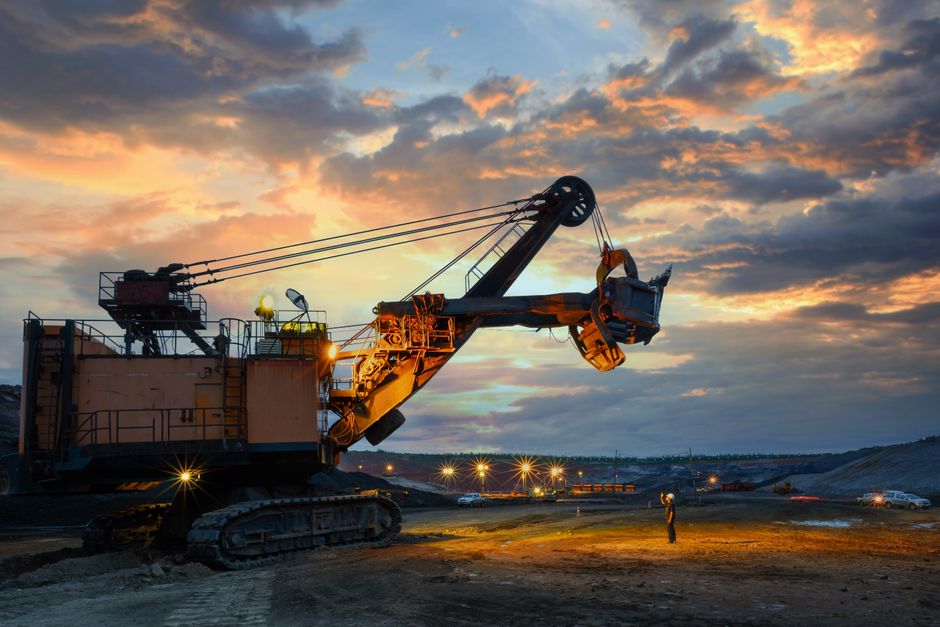
The implementation of AI-Driven Predictive Maintenance in heavy industrial settings differs substantially from lighter manufacturing applications due to the scale, complexity, and criticality of the assets involved. A 250-ton hydraulic press, a 50-megawatt gas turbine, or a 20-story distillation column cannot be treated as interchangeable production assets—each represents millions of dollars in replacement value, requires weeks or months of lead time for critical components, and operates under extreme conditions of temperature, pressure, and mechanical stress. These characteristics demand prediction approaches specifically engineered for heavy industrial operational profiles, with sensing strategies, algorithm architectures, and intervention protocols designed around the unique failure physics of large-scale equipment.
Turbomachinery Applications and Rotating Equipment Monitoring
Gas turbines, steam turbines, and large compressors represent some of the most critical and expensive assets in heavy industrial operations, with individual units valued at $5-50 million and failure costs that can exceed $1 million per day in lost production. These assets have become primary targets for AI-driven predictive maintenance implementation due to their high consequence of failure and the rich sensor data they generate during operation. Modern turbomachinery monitoring systems integrate dozens of sensors measuring vibration across multiple axes, bearing temperatures, lubricant condition, performance parameters, and combustion dynamics, generating continuous data streams that machine learning algorithms analyze for degradation patterns.
Vibration analysis provides the foundation for most turbomachinery predictive maintenance programs. While traditional vibration monitoring relies on fixed alarm thresholds and manual spectrum analysis, AI-driven approaches employ neural networks trained on thousands of operating hours to identify subtle pattern changes that precede bearing failures, rotor imbalance, misalignment, and blade damage. These algorithms can detect developing issues 3-6 weeks before they progress to critical severity levels, providing sufficient time to schedule maintenance windows, procure parts, and assemble specialized repair crews without forcing emergency shutdowns.
A power generation facility operating multiple Frame 7 gas turbines implemented machine learning-based vibration analysis after experiencing three unplanned outages in 18 months, each costing approximately $2.8 million in lost generation revenue and emergency repairs. The predictive system identified bearing degradation in a fourth turbine 28 days before predicted failure, allowing the facility to schedule a planned outage, replace the bearings during a low-demand period, and avoid another costly unplanned event. Over the subsequent three years, the facility experienced zero unplanned turbine outages attributable to mechanical failures, while optimizing planned maintenance intervals based on actual component condition rather than conservative time-based schedules.
Hydraulic Systems in Heavy Equipment Manufacturing
Large hydraulic presses, injection molding machines, and metal forming equipment rely on high-pressure hydraulic systems where failures can pose significant safety risks in addition to production disruptions. Hydraulic system failures typically stem from contamination, seal degradation, pump wear, and valve malfunctions—failure modes that develop over weeks or months and generate detectable precursor signals through pressure variations, temperature changes, and fluid contamination levels. AI-driven predictive maintenance for hydraulic systems integrates fluid sampling data, pressure transducer signals, and thermal imaging to build comprehensive equipment health models.
Condition monitoring of hydraulic systems presents unique challenges because many degradation mechanisms occur within sealed components not directly observable during operation. Machine learning models address this limitation by correlating observable parameters—system pressure, actuator cycle times, fluid temperature profiles—with internal component conditions learned from historical failure data. When a 5,000-ton forging press begins showing pressure fluctuations of 2-3% during the forming stroke, algorithms trained on similar equipment can identify this as an early indicator of pump wear or contamination issues requiring investigation, even though the pressure variation remains within traditional operating tolerances.
An automotive parts manufacturer operating 24 large hydraulic presses implemented predictive maintenance after a catastrophic seal failure resulted in a hydraulic fluid release, three-week production stoppage, and $4.2 million in cleanup and repair costs. The predictive system monitors fluid cleanliness, pressure stability, and thermal patterns across all presses, generating condition alerts when multiple parameters indicate developing issues. In the 30 months following implementation, the system identified developing problems in seven presses, all of which were addressed during planned maintenance windows. Beyond avoiding another catastrophic failure, the condition-based approach reduced hydraulic fluid consumption by 35% by identifying and correcting small leaks before they became significant, while extending pump life by 40% through early detection of contamination issues.
Large-Scale Process Equipment and Heat Exchangers
Process industries—chemical manufacturing, petroleum refining, and pulp and paper—operate massive heat exchangers, reactors, and separation columns where Equipment Lifecycle Management extends 20-30 years and condition assessment has traditionally relied on periodic shutdowns for internal inspection. These assets present distinct predictive maintenance challenges because their primary failure modes—corrosion, fouling, and stress cracking—occur gradually and often cannot be directly observed during operation. AI-driven approaches for process equipment combine external sensing (thermal imaging, acoustic emission, performance monitoring) with process data analysis to infer internal conditions without intrusive inspection.
Heat exchanger fouling represents a particularly costly degradation mechanism because it progressively reduces thermal efficiency, forcing process adjustments that increase energy consumption and reduce throughput. Traditional approaches monitor overall heat transfer coefficients and schedule cleaning on fixed intervals, often cleaning exchangers prematurely or allowing excessive fouling before intervention. Machine learning models analyze the relationship between operating conditions (flow rates, temperatures, fluid compositions) and heat transfer performance to predict fouling progression and optimize cleaning schedules based on actual condition and economic impact.
A petrochemical facility with 180 large shell-and-tube heat exchangers implemented AI-driven fouling prediction to optimize their cleaning program. Their previous approach scheduled cleaning on 180-day intervals regardless of actual fouling levels, resulting in some exchangers being cleaned unnecessarily while others operated with significant fouling for weeks before scheduled cleaning. The predictive system analyzes temperature, pressure, and flow data to estimate fouling resistance in each exchanger and prioritizes cleaning based on economic impact—the relationship between fouling level, energy waste, and production constraints. After implementation, annual cleaning interventions decreased from 360 to 245, saving $1.8 million in cleaning costs, while energy efficiency improved by 4.2% by ensuring exchangers were cleaned when fouling actually impacted performance. The approach also extended exchanger tube life by reducing cleaning frequency and the associated tube erosion from high-pressure water jetting.
Integration with Reliability-Centered Maintenance Programs
AI-driven predictive maintenance achieves maximum impact when integrated with comprehensive RCM programs that systematically identify critical failure modes, assess consequences, and select optimal maintenance strategies. Organizations advancing AI solution capabilities for industrial maintenance find that machine learning algorithms provide the condition-monitoring foundation for RCM's condition-based maintenance strategies, while RCM provides the failure mode analysis and criticality assessment that focuses predictive monitoring on the highest-value applications.
The integration typically begins with RCM analysis identifying critical failure modes for high-consequence assets—failure modes that pose safety risks, cause extended downtime, or generate major repair costs. For each critical failure mode, reliability engineers assess whether condition monitoring can detect developing failures with sufficient lead time to enable planned interventions. When feasible, they specify sensing requirements and prediction objectives—for example, "detect developing bearing failures in cooling tower gearboxes with 21-day lead time and 80% confidence." These specifications guide sensor deployment and algorithm development, ensuring that predictive maintenance investments align with actual reliability priorities rather than monitoring assets indiscriminately.
A specialty metals manufacturer implemented this integrated approach after completing comprehensive RCM analysis across their production assets. The analysis identified 47 critical failure modes across 18 asset types where condition monitoring could enable predictive maintenance. Rather than attempting to monitor all equipment simultaneously, they prioritized implementations based on failure consequence and prediction feasibility, deploying predictive monitoring for the 12 highest-value applications over 18 months. This focused approach achieved a 14-month payback period—substantially faster than alternative broad deployment strategies—while establishing the organizational capabilities and data infrastructure to expand monitoring to additional assets over time.
Operational Efficiency Gains Through Production Optimization
Beyond preventing failures, AI-driven predictive maintenance enables production optimization by providing continuous visibility into asset performance and remaining useful life. This visibility allows production planners to make informed decisions about equipment loading, production scheduling, and maintenance timing that balance production targets against equipment health. When predictive models indicate that a critical machine has 45-60 days of remaining useful life before requiring maintenance, planners can optimize production schedules to maximize output during that period while ensuring maintenance occurs during planned low-demand windows.
This production-maintenance integration represents a fundamental shift from traditional approaches where maintenance and operations functions often work at cross-purposes—maintenance seeking to preserve assets through conservative operating practices while operations push for maximum throughput. Predictive maintenance provides objective data about actual equipment condition and degradation rates under different operating scenarios, enabling collaborative decision-making based on quantified trade-offs. If running a production line at 95% capacity instead of 100% extends equipment life by 30% while reducing output by only 5%, predictive models can quantify that relationship and support informed business decisions.
An industrial minerals processor implemented production-maintenance integration using predictive maintenance data from their crushing and grinding circuits. Their previous approach involved running equipment at maximum capacity until failures occurred, then conducting emergency repairs with production halted. Predictive monitoring revealed that their jaw crushers experienced bearing wear rates that increased exponentially above 90% design capacity—operating at 95% capacity produced bearing wear rates 2.5 times higher than operation at 85% capacity. Armed with this data, they implemented a production strategy that varied crusher loading based on predicted maintenance timing, running at higher capacities early in maintenance cycles and reducing loading as predicted maintenance dates approached. This strategy increased overall equipment availability by 11% while extending bearing life by 35%, generating combined value of $3.2 million annually across their crushing operations.
Implementation Challenges and Success Factors
Successful AI-driven predictive maintenance implementation in heavy industrial environments requires addressing several industry-specific challenges that differ from lighter manufacturing applications. Sensor installation on large, high-temperature, high-pressure equipment often requires custom mounting solutions and ruggedized instrumentation capable of surviving harsh operating conditions for years without maintenance. Wireless sensor networks that work reliably in office environments may fail in heavy industrial settings due to metal structures, electrical noise, and environmental extremes. Organizations must invest in industrial-grade sensing infrastructure specifically designed for these demanding applications.
Data integration presents another significant challenge, particularly in facilities with legacy control systems and equipment from multiple vendors. Heavy industrial assets often operate for 30-40 years, meaning predictive maintenance systems must integrate data from equipment control systems spanning decades of technology evolution—from pneumatic controls to modern digital systems. This requires flexible data acquisition architectures capable of interfacing with diverse protocols and converting analog signals, digital fieldbus communications, and modern industrial Ethernet into unified data streams for analysis.
Perhaps the most critical success factor is organizational change management. Maintenance technicians and reliability engineers with decades of experience making decisions based on intuition and traditional condition monitoring approaches may initially resist algorithmic predictions, particularly when algorithms recommend actions that conflict with conventional practices. Successful implementations address this challenge through collaborative deployment approaches that position AI as augmenting—not replacing—human expertise. When technicians understand how algorithms generate predictions and see their domain knowledge incorporated into model development, resistance typically transforms into enthusiastic adoption as users recognize the technology's ability to handle routine analysis while freeing them to focus on complex problem-solving.
Conclusion
AI-driven predictive maintenance has evolved from experimental technology to proven capability in heavy industrial equipment manufacturing, with implementations across power generation, metals processing, chemical manufacturing, and heavy machinery production demonstrating substantial operational and financial benefits. The technology's ability to predict failures weeks or months in advance, optimize maintenance timing based on actual equipment condition, and integrate maintenance planning with production scheduling addresses fundamental challenges that have constrained industrial operations for decades. As sensing costs continue declining and machine learning algorithms improve, predictive maintenance is transitioning from a competitive advantage to a baseline requirement for operational excellence in heavy industrial manufacturing. Organizations that integrate predictive capabilities with comprehensive AI Asset Management strategies position themselves to extract maximum value from these technologies while building the data foundations and organizational capabilities required for the next generation of autonomous maintenance operations and self-optimizing production systems.


Comments
Post a Comment