AI in Smart Manufacturing: Data-Driven Insights and Performance Metrics
Manufacturing operations are experiencing a fundamental transformation as artificial intelligence technologies deliver measurable improvements across production environments. Recent industry data reveals that manufacturers implementing AI-driven solutions achieve 20-30% reductions in unplanned downtime while simultaneously improving OEE by 15-25%. These quantifiable gains represent more than incremental improvements—they signal a paradigm shift in how production facilities manage everything from predictive maintenance schedules to real-time quality control. The convergence of IoT-enabled devices, SCADA systems, and machine learning algorithms creates unprecedented visibility into manufacturing processes, enabling operations teams to make data-informed decisions that directly impact throughput and profitability.
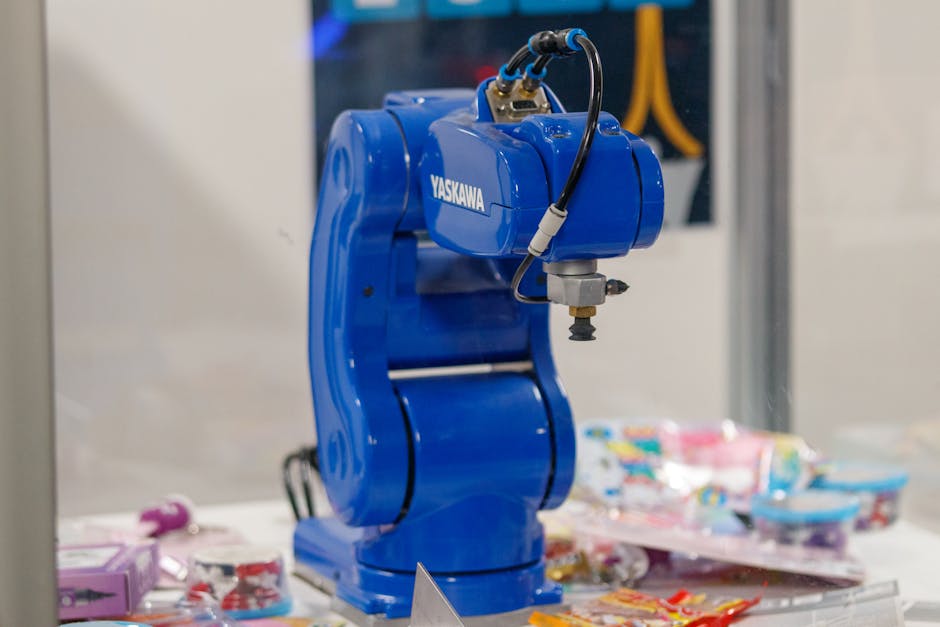
The integration of AI in Smart Manufacturing environments has moved beyond pilot programs into full-scale deployment across multiple industrial sectors. Companies like Siemens and Rockwell Automation report that their clients implementing AI-powered CMMS solutions see maintenance cost reductions averaging 18-22% within the first 12 months. The data demonstrates that AI's value proposition extends across the entire production lifecycle, from demand forecasting accuracy improvements of 30-40% to supply chain visibility enhancements that reduce material requirement planning errors by up to 35%. These metrics reflect real operational changes that manufacturing executives can quantify in their quarterly performance reviews and annual strategic planning sessions.
Quantifying AI Impact on Predictive Maintenance Programs
Predictive Maintenance AI has emerged as one of the highest-ROI applications in manufacturing environments, with industry studies showing that AI-powered maintenance strategies reduce equipment failures by 40-50% compared to traditional preventive maintenance schedules. The economic impact becomes clear when examining specific metrics: manufacturers implementing AI-driven predictive maintenance report average savings of $250,000-$500,000 annually per production line through reduced emergency repairs and extended asset lifecycles. These figures align with data from ABB and General Electric, whose AI-powered condition monitoring systems analyze vibration patterns, thermal signatures, and acoustic emissions to predict component failures 2-4 weeks before they occur.
The statistical evidence supporting predictive maintenance AI extends beyond cost savings to encompass production continuity metrics. Facilities using AI-enhanced CMMS platforms document mean time between failures (MTBF) improvements of 25-35%, while mean time to repair (MTTR) decreases by 20-30% due to AI-driven root cause analysis that pinpoints failure mechanisms with 85-90% accuracy. Manufacturing operations running Lean manufacturing protocols find that AI-powered maintenance scheduling eliminates 60-70% of unplanned production stops, directly supporting just-in-time production requirements and minimizing work-in-progress inventory accumulation.
Machine Learning Model Performance in Failure Prevention
The effectiveness of Predictive Maintenance AI depends on machine learning model accuracy, which industry benchmarks now place at 88-94% for well-trained systems with 12-18 months of historical sensor data. Random forest and gradient boosting algorithms demonstrate particular effectiveness in manufacturing contexts, achieving precision rates above 90% when predicting bearing failures, motor malfunctions, and hydraulic system degradation. These models process data from thousands of IoT-enabled sensors continuously, identifying anomaly patterns that human operators miss 70-80% of the time during manual inspections.
Digital Twin Technology and Process Optimization Metrics
Digital Twin Technology represents another data-rich application area where AI in Smart Manufacturing delivers quantifiable results. Manufacturers implementing digital twin systems report process optimization gains of 15-20% in energy efficiency and 10-15% improvements in material utilization rates. The technology creates virtual replicas of physical production lines, enabling AI algorithms to simulate thousands of process variations and identify optimal parameter settings without disrupting actual production. Honeywell's data indicates that digital twin implementations reduce time-to-market for new product introductions by 25-30% through virtual commissioning and rapid prototyping cycles.
Process Optimization AI leveraging digital twin platforms demonstrates measurable impact on Six Sigma initiatives and quality control automation. Organizations can build robust AI solution frameworks that integrate seamlessly with existing ERP systems to optimize production parameters continuously. Manufacturers track first-pass yield improvements of 8-12% and defect rate reductions of 40-50% when AI systems adjust process variables in real-time based on digital twin simulations. The statistical process control charts show tighter specification tolerances, with process capability indices (Cpk) improving from 1.33 to 1.67+ in facilities where AI-driven process optimization has been deployed for 18+ months.
ROI Analysis and Implementation Timelines
Financial analysis of Digital Twin Technology implementations reveals median payback periods of 14-18 months, with total ROI reaching 200-300% over three-year deployment cycles. The initial capital investment typically ranges from $500,000 to $2 million depending on facility complexity, but operational savings accumulate rapidly through reduced scrap rates, lower energy consumption, and improved asset utilization. Manufacturing finance teams document that every 1% improvement in OEE translates to approximately $50,000-$150,000 in annual profit contribution for mid-sized production facilities, making the business case for AI investment increasingly compelling.
Supply Chain Visibility and Demand Forecasting Accuracy
AI in Smart Manufacturing extends beyond the factory floor to encompass end-to-end supply chain visibility, where machine learning models analyze historical demand patterns, market signals, and external variables to generate forecasts with 35-40% better accuracy than traditional statistical methods. This improvement directly addresses one of manufacturing's most persistent pain points—managing supply chain disruptions and inventory optimization. Companies implementing AI-powered demand forecasting report inventory carrying cost reductions of 20-25% while simultaneously decreasing stockout incidents by 30-40%.
The data science underlying supply chain AI applications processes millions of data points from ERP systems, supplier networks, and market intelligence sources to predict demand fluctuations 8-12 weeks in advance with 75-82% accuracy. This forecasting capability enables material requirement planning teams to adjust procurement strategies proactively, reducing expedited shipping costs by 40-50% and improving supplier relationship management through more stable order patterns. Manufacturing operations practicing Agile manufacturing principles find that AI-enhanced demand forecasting supports their flexibility requirements while maintaining lean inventory profiles that free up working capital for other strategic investments.
Quality Control Automation and Statistical Evidence
Computer vision systems powered by AI algorithms now inspect manufactured components at rates exceeding 1,000 units per minute with defect detection accuracy of 95-99%, compared to 85-90% accuracy rates for human visual inspection. This represents a fundamental shift in quality control automation capabilities, enabling 100% inspection protocols that were economically unfeasible with manual methods. Statistical quality control data shows that AI-powered vision systems identify defect categories that human inspectors miss 60-70% of the time, including micro-cracks, subtle color variations, and dimensional deviations within ±0.05mm tolerances.
The implementation of AI-driven quality systems correlates with warranty claim reductions of 25-35% and customer satisfaction score improvements of 15-20 percentage points. Manufacturers document that automated inspection systems achieve consistent performance across shifts and production cycles, eliminating the human variability factors that contribute to quality escapes. When integrated with BOM management and product lifecycle management systems, quality control AI provides traceability data that supports regulatory compliance requirements while generating actionable insights for continuous improvement initiatives and change management processes.
Industry 4.0 Adoption Rates and Benchmark Comparisons
Current adoption statistics indicate that 68% of large manufacturers have implemented at least one AI application in their production environments, while 45% report multiple AI systems operating across predictive maintenance, quality control, and process optimization functions. Industry 4.0 maturity assessments show that early adopters—companies that began AI deployments 3-5 years ago—now achieve 30-40% higher labor productivity and 20-25% better asset turnover ratios compared to industry peers still relying on conventional automation without AI enhancement.
Regional analysis reveals variation in AI in Smart Manufacturing adoption, with European manufacturers leading at 72% implementation rates, followed by North American facilities at 66% and Asian manufacturers at 61%. The data suggests that regulatory environments supporting Industry 4.0 investments and workforce development programs focused on AI literacy accelerate adoption rates by 15-20 percentage points. Manufacturing executives cite integration challenges with legacy systems as the primary barrier, with 54% reporting that connecting AI applications to existing SCADA and MES platforms requires 6-12 months of systems integration work.
Performance Benchmarking Across Manufacturing Segments
Discrete manufacturers implementing AI technologies report different performance metrics compared to process manufacturers, with discrete operations seeing stronger gains in setup time reduction (35-45% improvement) and changeover efficiency (30-40% faster), while process manufacturers achieve superior results in energy optimization (20-25% reduction) and yield improvement (12-18% increase). These segment-specific patterns inform strategic investment decisions, helping operations leaders prioritize AI applications that align with their facility's operational characteristics and improvement opportunities.
Conclusion: Data-Driven Decision Making for AI Investment
The statistical evidence supporting AI in Smart Manufacturing continues to strengthen as more facilities reach operational maturity with their AI deployments and generate longitudinal performance data. Manufacturing executives evaluating AI investments can now reference industry benchmarks spanning predictive maintenance ROI, quality improvement metrics, process optimization gains, and supply chain performance enhancements. The data demonstrates that AI applications deliver measurable value across the full spectrum of manufacturing operations, from product lifecycle management through final inspection and delivery. Organizations seeking to maintain competitive positioning in increasingly dynamic markets find that AI-driven insights enable faster adaptation to demand shifts, supply chain disruptions, and quality requirements. While the integration journey requires careful change management and systems architecture planning, the quantifiable outcomes—20-30% downtime reductions, 15-25% OEE improvements, and 200-300% three-year ROI figures—provide compelling evidence for strategic AI adoption. As manufacturing operations explore complementary technologies, some organizations also investigate how Generative AI Financial Solutions can optimize capital allocation decisions and financial planning processes that support ongoing Industry 4.0 transformation initiatives across their enterprise portfolios.


Comments
Post a Comment