Generative AI Deployment Blueprint: Transforming Modern Manufacturing Operations
Modern manufacturing operations face unprecedented complexity as global supply chains intertwine with localized production demands, quality expectations rise to near-zero defect tolerances, and equipment sophistication creates maintenance challenges that exceed human analytical capacity. Traditional operational approaches—linear process optimization, reactive maintenance scheduling, and rules-based quality control—no longer suffice in environments where a single production line generates millions of data points hourly. Manufacturing leaders at organizations like GE Digital and Rockwell Automation recognize that sustained competitive advantage now depends on transforming operational data into intelligent action, a transition that requires systematic integration of generative AI capabilities throughout the manufacturing value chain.
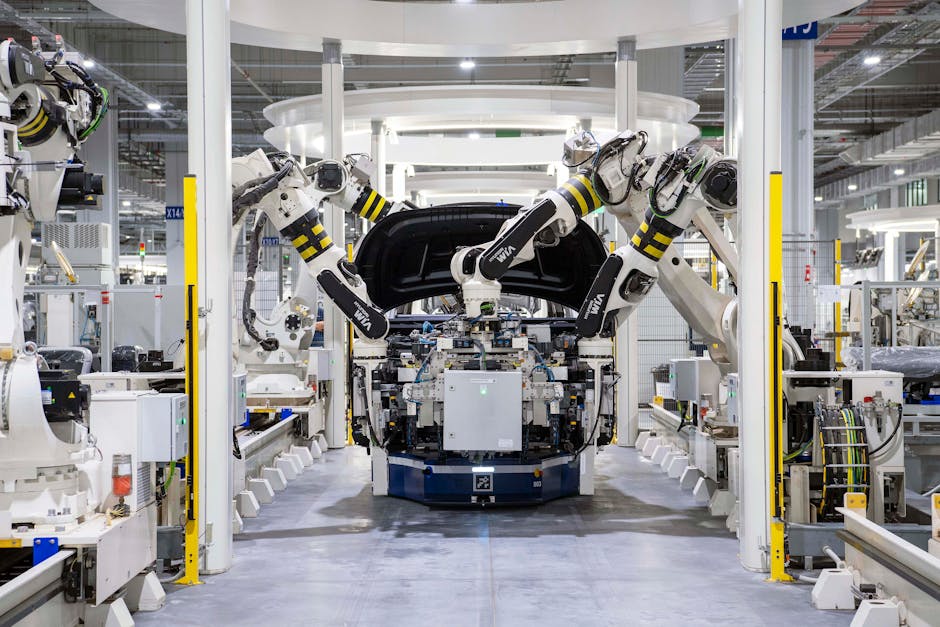
Deploying these capabilities effectively demands more than acquiring advanced algorithms or hiring data scientists. It requires a comprehensive Generative AI Deployment Blueprint specifically adapted to manufacturing's unique operational realities—production continuity requirements, safety-critical decision-making, regulatory compliance obligations, and workforce dynamics that distinguish industrial environments from purely digital sectors. This blueprint must address not only technical architecture but also organizational change management, process integration, and the careful sequencing of AI capabilities to build momentum while managing risk across manufacturing's interconnected functional domains.
Understanding Generative AI's Role in Manufacturing Operations
Generative AI differs fundamentally from the predictive analytics and machine learning tools manufacturers have deployed over the past decade. Where traditional AI models classify outcomes or forecast trends based on historical patterns, generative AI creates novel solutions—optimized production schedules that never existed before, maintenance protocols adapted to unique equipment configurations, quality inspection criteria that evolve with process variations, and supply chain strategies that dynamically respond to emerging constraints.
In manufacturing contexts, this generative capability proves transformative across multiple operational domains. Production planning systems leverage generative models to synthesize thousands of variables—machine availability, workforce scheduling, material constraints, energy costs, customer priorities—into optimized manufacturing sequences that maximize throughput while minimizing changeover waste. Quality systems generate inspection parameters tailored to specific production runs rather than applying generic thresholds. Maintenance operations receive equipment-specific service recommendations that account for actual usage patterns, environmental conditions, and component degradation signatures unique to individual assets.
Manufacturing Execution Systems Integration
Manufacturing Execution Systems serve as the operational backbone connecting enterprise planning to shop floor execution, tracking work orders, material consumption, equipment status, and quality metrics in real-time. Integrating generative AI into MES platforms creates intelligent execution layers that move beyond transaction recording to active process optimization.
A properly structured Generative AI Deployment Blueprint approaches MES integration systematically, beginning with data pipeline establishment that channels sensor streams, quality measurements, and production events into AI-accessible repositories. Siemens' Opcenter MES implementations demonstrate this integration pattern—generative models consume production data to identify bottleneck operations, recommend resource reallocations, and generate alternative routing strategies when equipment constraints emerge.
The operational impact manifests in multiple dimensions. Production schedulers receive AI-generated recommendations that reduce setup time by identifying optimal job sequencing based on tooling similarities and material characteristics. Operators access real-time process adjustments—feed rates, temperatures, cycle times—dynamically optimized for current conditions rather than static parameters. Quality engineers obtain automated root cause analyses when defect patterns emerge, with the AI generating hypotheses about process variables most likely contributing to quality degradation.
Predictive Maintenance and Equipment Reliability
Equipment reliability represents perhaps the most mature application area for AI in manufacturing, yet generative approaches extend capabilities far beyond traditional predictive maintenance. Where earlier systems flagged impending failures, generative AI prescribes specific interventions, generates maintenance procedures for novel failure modes, and synthesizes repair strategies that optimize across competing objectives—equipment availability, parts inventory, technician scheduling, and production priorities.
Implementing these capabilities requires careful attention to data foundation—vibration sensors, thermal imaging, lubricant analysis, power consumption monitoring, and historical maintenance records must feed unified data models. Honeywell's experience across process manufacturing demonstrates that comprehensive sensor coverage (typically 15-20 monitoring points per critical asset) enables generative models to achieve >90% prediction accuracy for equipment degradation.
The deployment blueprint sequences these capabilities thoughtfully. Initial implementations focus on critical assets where downtime costs justify AI investment—primary production equipment, bottleneck operations, and assets with long lead-time replacement components. As models mature and organizational confidence builds, coverage expands to secondary equipment, auxiliary systems, and facility infrastructure. Organizations seeking to implement these capabilities benefit from exploring specialized AI solution frameworks designed specifically for industrial applications where reliability and safety take precedence over pure optimization.
Quality Control and Process Optimization
Manufacturing quality control traditionally operates through statistical process control—monitoring key dimensions against specification limits and triggering interventions when measurements drift toward boundaries. Generative AI transforms this reactive posture into proactive quality orchestration, identifying subtle process variations before they manifest as defects and generating compensatory adjustments that maintain output within specification.
Computer vision applications exemplify this transformation. Where traditional vision systems compare images against fixed templates, generative models learn acceptable variation ranges and identify anomalous patterns that human inspectors and rule-based systems miss. Automotive manufacturers deploying these systems report defect detection improvements from 87% (human inspection baseline) to 96-98% (AI-augmented inspection), with false positive rates declining by 64%.
Advanced Product Quality Planning processes gain similar advantages. Generative models trained on historical APQP data generate control plans, FMEA analyses, and measurement system designs tailored to specific product characteristics rather than relying on template adaptation. This capability proves especially valuable for high-mix manufacturing environments where product variety makes manual APQP development resource-intensive and error-prone.
Supply Chain Optimization and Demand Intelligence
Supply Chain Optimization extends beyond manufacturing's four walls but directly impacts production efficiency, inventory carrying costs, and customer delivery performance. Generative AI deployment in this domain creates intelligent forecasting, dynamic sourcing strategies, and adaptive logistics planning that respond to real-time supply and demand signals.
The blueprint approach integrates multiple data streams—customer order patterns, supplier performance metrics, logistics capacity, commodity pricing, geopolitical risk indicators, and production constraints—into unified demand and supply models. These models generate procurement recommendations, safety stock calculations, and supplier allocation strategies that optimize across competing objectives rather than applying simple reorder rules.
Manufacturing organizations leveraging these capabilities report substantial working capital improvements. Inventory levels decline 25-35% as AI-generated stocking policies better match actual consumption patterns. Stock-out incidents decrease by 60-70% as the system anticipates demand variations and supply disruptions earlier than traditional forecasting methods. Lead time variability narrows as generative models identify optimal supplier selections balancing cost, reliability, and capacity availability.
Workforce Integration and Skills Evolution
Successful generative AI deployment in manufacturing depends critically on workforce adoption—operators must trust AI recommendations, maintenance technicians need to understand model outputs, and production managers require confidence in AI-generated schedules. The deployment blueprint must therefore address change management with the same rigor applied to technical architecture.
Leading implementations follow staged introduction patterns. Initial deployments position AI as decision support rather than autonomous control—the system generates recommendations that experienced personnel evaluate and approve. This approach builds organizational confidence while creating feedback loops that improve model performance. As trust develops, automation levels increase selectively in low-risk domains while retaining human oversight for safety-critical and high-complexity decisions.
Training programs must evolve beyond traditional manufacturing skills to incorporate data literacy and AI interaction capabilities. Production supervisors learn to interpret model confidence scores and understand when to override AI recommendations. Maintenance planners develop skills in training data quality assessment and model performance monitoring. Quality engineers acquire capabilities in establishing appropriate validation criteria for AI-generated inspection parameters. Organizations investing 6-10% of deployment budgets in these workforce development initiatives achieve adoption rates exceeding 80% within 18 months of implementation.
Regulatory Compliance and Documentation
Regulated manufacturing sectors—pharmaceuticals, medical devices, aerospace, automotive—face stringent documentation and validation requirements that complicate AI deployment. The Generative AI Deployment Blueprint must address these compliance obligations explicitly, establishing validation protocols, audit trails, and change control processes that satisfy regulatory expectations while enabling continuous model improvement.
CFR Part 11 compliance for electronic records and signatures, ISO 13485 requirements for medical device quality systems, and AS9100 standards for aerospace manufacturing all demand documented evidence of system validation, performance monitoring, and change control. Generative AI systems must therefore incorporate comprehensive logging—model training data, algorithm versions, parameter configurations, prediction outputs, and human override decisions—creating traceable records that demonstrate system reliability and appropriate use.
Forward-thinking manufacturers implement AI systems with built-in compliance frameworks rather than retrofitting documentation capabilities. Models undergo formal validation following IQ/OQ/PQ protocols adapted from traditional equipment qualification. Change control boards review model updates against risk assessment criteria. Performance monitoring dashboards track model accuracy, prediction stability, and intervention frequency to detect degradation requiring revalidation.
Measuring and Scaling Impact
The transition from pilot deployments to enterprise-scale AI operations represents a critical juncture where many manufacturers stall. Successful scaling requires deliberate blueprint execution—standardized deployment processes, centralized AI infrastructure, and governance frameworks that balance innovation with operational stability.
Key performance indicators must track both technical and business outcomes. Model accuracy metrics ensure AI systems maintain prediction quality as they extend to new equipment and processes. Operational metrics—OEE improvements, quality cost reductions, inventory turnover acceleration—quantify business value. Adoption metrics monitor user engagement, override frequencies, and feedback submission rates, providing early warning of resistance or trust erosion.
Organizations achieving successful scale typically establish Centers of Excellence that standardize deployment methodology, maintain reusable model components, and provide expertise to manufacturing sites implementing AI capabilities. This centralized support, combined with site-level implementation teams, creates the organizational capacity to deploy capabilities across multiple facilities while adapting to local operational contexts.
Conclusion
The transformation of manufacturing operations through generative AI represents far more than technological upgrade—it constitutes a fundamental reimagining of how industrial organizations leverage data, augment human expertise, and adapt to accelerating market demands. Organizations that approach this transformation systematically, guided by comprehensive deployment blueprints tailored to manufacturing's operational realities, position themselves to achieve sustained competitive advantage through superior asset utilization, enhanced quality performance, and responsive supply chain capabilities. The pathway forward requires balancing technological sophistication with organizational readiness, scaling proven capabilities while maintaining operational stability, and continuously evolving AI systems as manufacturing processes and market conditions change. For manufacturers ready to extend these intelligent capabilities specifically into equipment reliability domains, implementing Predictive Maintenance AI provides a focused entry point that delivers measurable value while building organizational competency for broader AI deployment across the manufacturing enterprise.


Comments
Post a Comment