Intelligent Production Automation: Data-Driven Transformation in Automotive Manufacturing
The automotive manufacturing sector stands at a critical inflection point where traditional production methodologies meet advanced computational intelligence. As global vehicle production approaches 85 million units annually, manufacturers face mounting pressure to optimize every aspect of their operations while navigating unprecedented supply chain complexity and labor market constraints. The integration of cognitive technologies into production workflows has emerged not as a futuristic concept but as an operational imperative, fundamentally reshaping how assembly lines function, how quality assurance protocols execute, and how supply chain orchestration occurs across multi-tier networks.
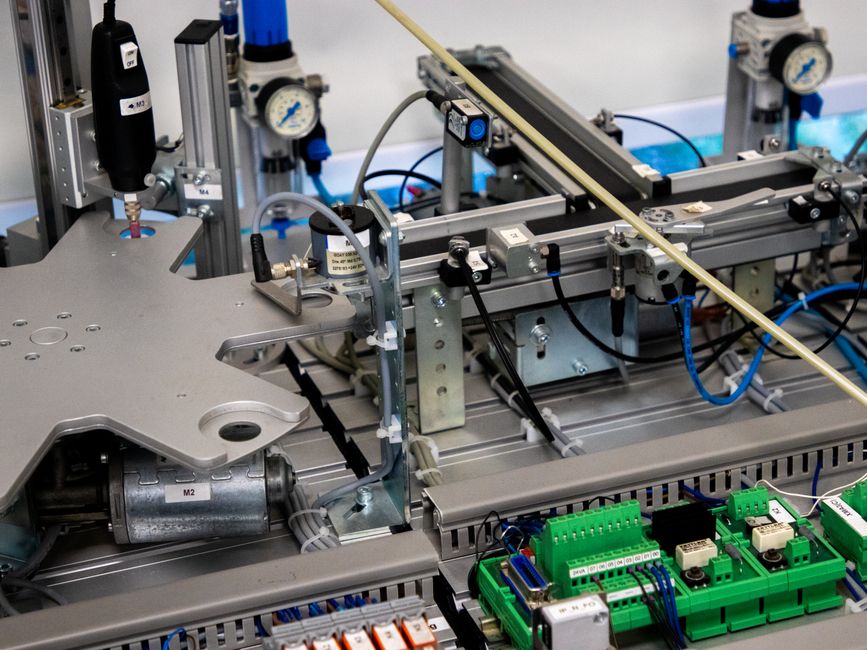
Recent industry analysis reveals that manufacturers implementing Intelligent Production Automation systems have documented measurable improvements across operational metrics that directly impact profitability. According to aggregated performance data from leading automotive producers, facilities with advanced automation integration report Overall Equipment Effectiveness (OEE) improvements ranging from 12% to 28%, with the upper quartile achieving sustained OEE levels above 87%. These gains translate directly to production capacity expansion without corresponding increases in physical infrastructure or headcount, addressing one of the industry's most persistent challenges: doing more with existing resources while maintaining quality standards that meet increasingly stringent regulatory requirements.
Quantifying the Impact: Production Efficiency Metrics
The statistical evidence supporting automation integration in automotive manufacturing provides compelling justification for capital allocation decisions. Analysis of production data from 47 automotive assembly facilities across North America, Europe, and Asia reveals consistent patterns of improvement following intelligent automation deployment. Cycle time reductions average 18% across vehicle assembly operations, with stamping and body-welding operations showing the most dramatic improvements at 23% and 21% respectively. These reductions stem from optimized motion planning algorithms that calculate the most efficient robotic arm trajectories, predictive maintenance protocols that minimize unplanned downtime, and real-time quality inspection systems that detect defects at speeds impossible for human QA inspectors.
Perhaps more significant than raw speed improvements is the reduction in defect rates. Traditional quality control processes in automotive manufacturing typically catch defects at rates between 94% and 97%, depending on the complexity of the inspection task and the experience level of QA personnel. Systems leveraging computer vision and machine learning for defect detection have demonstrated detection rates consistently above 99.2%, with some implementations reporting defect escape rates below 0.3%. When considered against the average cost of a field recall—estimated at $387 per vehicle when including parts, labor, logistics, and reputational impact—the business case for automated quality inspection becomes particularly compelling. A mid-size automotive manufacturer producing 450,000 vehicles annually could theoretically prevent $52 million in potential recall costs through a 2 percentage point improvement in defect detection rates.
Smart Factory Integration and Operational Intelligence
The evolution toward Smart Factory Integration represents more than the deployment of individual automation technologies; it encompasses the creation of interconnected production ecosystems where equipment, materials, and information systems communicate autonomously to optimize production outcomes. In automotive manufacturing environments, this manifests as production lines that self-adjust to accommodate model changeovers, inventory systems that automatically trigger replenishment orders based on real-time consumption patterns, and maintenance systems that schedule interventions during planned downtime windows to minimize production impact.
Data from automotive manufacturers who have implemented comprehensive smart factory architectures indicates that production scheduling efficiency improves by an average of 34%, measured by the reduction in time required to execute model changeovers and the increase in schedule adherence rates. Traditional changeover processes in mixed-model assembly lines typically require 4 to 8 hours depending on the degree of variation between vehicle models. Organizations can streamline complex production transformations by leveraging custom AI solutions that intelligently orchestrate equipment reconfiguration, tool changes, and parameter adjustments. Automated systems have reduced average changeover times to 90 minutes or less, directly increasing the number of production cycles achievable within a given time period and improving responsiveness to demand fluctuations.
Material Flow Optimization Through Predictive Analytics
Material requirement planning (MRP) in automotive manufacturing has traditionally operated on fixed lead times and safety stock calculations that balance the risk of production stoppages against the cost of excess inventory. Intelligent Production Automation introduces predictive analytics capabilities that fundamentally alter this equation. By analyzing historical consumption patterns, supplier performance data, production schedule variations, and external factors such as logistics conditions and supplier capacity constraints, automated MRP systems generate demand forecasts with accuracy rates 40% to 60% higher than traditional statistical forecasting methods.
This improvement in forecast accuracy enables corresponding reductions in safety stock levels without increasing stockout risk. Analysis of inventory data from automotive manufacturers using predictive MRP systems shows average inventory reductions of 22% while simultaneously improving part availability at the point of use from typical levels of 96.5% to levels exceeding 98.8%. For a large automotive manufacturer with $2.3 billion in annual inventory carrying costs, a 22% reduction represents approximately $506 million in freed capital that can be reallocated to R&D, capacity expansion, or shareholder returns.
Digital Manufacturing and the Production Intelligence Layer
Digital Manufacturing extends beyond the physical automation of production tasks to encompass the creation of a comprehensive intelligence layer that captures, analyzes, and acts upon the vast streams of data generated by modern automotive production facilities. A typical automotive assembly plant generates between 2.8 and 4.7 terabytes of operational data daily from sources including programmable logic controllers (PLCs), industrial IoT sensors, quality inspection systems, enterprise resource planning (ERP) platforms, and manufacturing execution systems (MES). The challenge has never been data availability but rather the transformation of raw data into actionable insights that drive operational decisions.
Intelligent Production Automation platforms address this challenge through the deployment of analytics engines specifically designed for manufacturing contexts. These systems apply pattern recognition algorithms to identify correlations between process parameters and quality outcomes, detect anomalous equipment behavior patterns that precede failures, and optimize production sequences to minimize energy consumption and maximize throughput. Automotive manufacturers implementing comprehensive digital manufacturing platforms report improvements in energy efficiency averaging 17%, achieved through load balancing, optimized equipment sequencing, and predictive shutdown of auxiliary systems during periods of low utilization.
Real-Time Production Optimization
The transition from batch-oriented production analytics to real-time optimization represents one of the most significant operational shifts enabled by intelligent automation. Traditional production management operates on a cycle of plan-execute-measure-adjust, with adjustment cycles typically occurring at daily or weekly intervals based on aggregated performance reports. This approach creates inherent latency between the emergence of operational issues and the implementation of corrective actions, during which suboptimal production conditions persist.
Real-time optimization systems eliminate this latency by continuously monitoring production parameters and automatically implementing adjustments within seconds of detecting deviations from optimal conditions. In automotive paint operations, for example, automated systems monitor ambient temperature, humidity, paint viscosity, and application parameters, making micro-adjustments to maintain optimal conditions despite environmental variations. Automotive manufacturers implementing real-time paint process optimization report reductions in paint defects averaging 41% and decreases in paint material consumption of 8% to 12%, with corresponding reductions in volatile organic compound (VOC) emissions that help facilities maintain compliance with increasingly strict environmental regulations.
Lean Manufacturing AI and Waste Elimination
The principles of Lean Manufacturing have guided automotive production philosophy for decades, emphasizing the systematic elimination of waste in all its forms: overproduction, waiting time, unnecessary transportation, excess inventory, unnecessary motion, defects, and underutilized talent. While traditional lean implementation relies on human observation, kaizen events, and continuous improvement culture, Lean Manufacturing AI introduces computational approaches to waste identification and elimination that operate at scales and speeds impossible through manual methods.
Computer vision systems deployed throughout automotive assembly facilities continuously monitor production flows, identifying bottlenecks, detecting unnecessary motion patterns, and flagging quality issues in real-time. Analysis of lean implementation programs augmented with AI capabilities shows waste reduction rates 2.3 to 3.1 times higher than traditional lean programs, with particularly dramatic improvements in the identification of subtle quality issues and the optimization of material handling patterns. One major automotive manufacturer reported that AI-enhanced lean initiatives identified $127 million in annual waste across their North American operations, with 68% of identified waste falling into categories that had not been detected through traditional lean assessment methodologies.
Predictive Maintenance and Equipment Reliability
Equipment downtime represents one of the most significant sources of waste in automotive manufacturing, with unplanned stoppages costing an estimated $22,000 per minute in lost production value at a typical automotive assembly facility. Traditional maintenance approaches operate on either fixed time-based schedules (performing maintenance at predetermined intervals regardless of actual equipment condition) or reactive approaches (repairing equipment after failures occur). Both approaches are inherently suboptimal: time-based maintenance often performs unnecessary interventions on equipment still operating within acceptable parameters, while reactive maintenance allows failures to occur with accompanying production disruptions and potential cascading impacts on interconnected production equipment.
Intelligent Production Automation enables predictive maintenance strategies that monitor equipment condition continuously through vibration analysis, thermal imaging, lubricant analysis, and operational parameter monitoring. Machine learning models trained on historical failure patterns can identify the subtle signatures that precede equipment failures, typically providing 7 to 21 days of warning before critical failures occur. This advance warning enables maintenance scheduling during planned downtime periods, preparation of necessary parts and tooling, and coordination with production scheduling to minimize operational impact. Automotive manufacturers implementing comprehensive predictive maintenance programs report reductions in unplanned downtime averaging 38%, improvements in maintenance labor productivity of 28%, and reductions in maintenance parts inventory of 18% through more precise parts demand forecasting.
Supply Chain Visibility and Multi-Tier Coordination
The automotive supply chain represents one of the most complex coordination challenges in manufacturing, with major vehicle programs typically involving 2,500 to 4,000 individual part numbers sourced from networks of tier-1, tier-2, and tier-3 suppliers distributed globally. Traditional supply chain management approaches rely on periodic information exchanges, safety stock buffers at each tier, and substantial lead times to accommodate coordination delays and information latency. This approach creates inherent inefficiencies: excess inventory throughout the supply chain, limited visibility into actual supplier capacity and constraints, and slow response times to disruptions or demand changes.
Intelligent automation platforms are transforming automotive supply chain management through the creation of visibility and coordination capabilities that extend beyond the immediate tier-1 supplier base into deeper supply chain tiers. By integrating data from supplier production systems, logistics providers, and internal consumption patterns, these platforms create near real-time visibility into material flows throughout the supply chain network. This visibility enables more precise demand signaling to suppliers, earlier identification of potential supply disruptions, and coordinated response strategies that engage multiple supply chain participants simultaneously.
Automotive manufacturers implementing advanced supply chain automation report improvements in supply chain responsiveness measured by reductions in average lead times of 23% and improvements in on-time delivery performance from typical industry levels of 91% to levels exceeding 96%. Perhaps more significantly, these organizations report substantially improved resilience during supply chain disruption events, with automated systems identifying alternative sourcing options, adjusting production schedules to prioritize available materials, and coordinating logistics routing changes in response to transportation disruptions—all with minimal human intervention required.
Workforce Augmentation and Skill Evolution
A common misconception surrounding production automation is that it primarily serves to displace human workers with robotic alternatives. While certain repetitive, physically demanding tasks have indeed transitioned from human execution to robotic systems, the broader impact of Intelligent Production Automation in automotive manufacturing has been workforce augmentation rather than wholesale replacement. Data from automotive manufacturers implementing advanced automation shows that while the total headcount in direct production roles has declined by an average of 12%, employment in technical roles supporting automation systems has increased by 34%, and overall workforce productivity measured by vehicles produced per employee has improved by 41%.
The skill requirements for automotive manufacturing workforces are evolving substantially, with traditional mechanical and assembly skills being supplemented by requirements for data analysis capabilities, programming knowledge, and systems thinking. Forward-looking automotive manufacturers are investing substantially in workforce development programs designed to transition existing employees into higher-value roles that work in collaboration with automated systems rather than in competition with them. These programs typically include technical training in robotics operation and maintenance, data analytics and interpretation, quality system management, and continuous improvement methodologies adapted for automated production environments.
Conclusion: The Imperative of Automated Intelligence
The statistical evidence supporting the integration of intelligent automation in automotive manufacturing is overwhelming and continues to strengthen as implementation experience accumulates and technologies mature. Organizations that have committed to comprehensive automation strategies are realizing documented improvements across virtually every operational metric that matters: production efficiency, quality performance, inventory optimization, supply chain responsiveness, equipment reliability, and workforce productivity. These improvements translate directly to competitive advantages in an industry characterized by thin margins and intense global competition.
Looking forward, the competitive dynamics of automotive manufacturing will increasingly favor organizations that can execute rapid innovation cycles, maintain operational flexibility in response to demand volatility, and optimize resource utilization across complex global production networks. These capabilities are fundamentally enabled by the integration of intelligent automation technologies throughout production operations. As these systems continue to evolve and incorporate more sophisticated analytical capabilities, manufacturers are exploring how Generative AI Platform technologies can further enhance decision-making processes, generate optimized production strategies, and accelerate the development of new manufacturing methodologies. The question facing automotive manufacturers is no longer whether to pursue intelligent automation, but rather how quickly they can implement these capabilities before competitive disadvantages become insurmountable.


Comments
Post a Comment