Measuring Impact: Data-Driven Analysis of Generative AI in Manufacturing
The manufacturing sector stands at an inflection point where data and artificial intelligence converge to redefine production economics. As industrial facilities grapple with rising material costs, labor shortages, and mounting pressure to reduce lead times, generative AI has emerged not as a speculative technology but as a quantifiable driver of operational transformation. Unlike previous waves of automation that replaced manual tasks with programmed sequences, generative AI introduces adaptive intelligence capable of optimizing complex processes in real-time, generating design alternatives, and predicting equipment failures before they cascade into costly downtime.
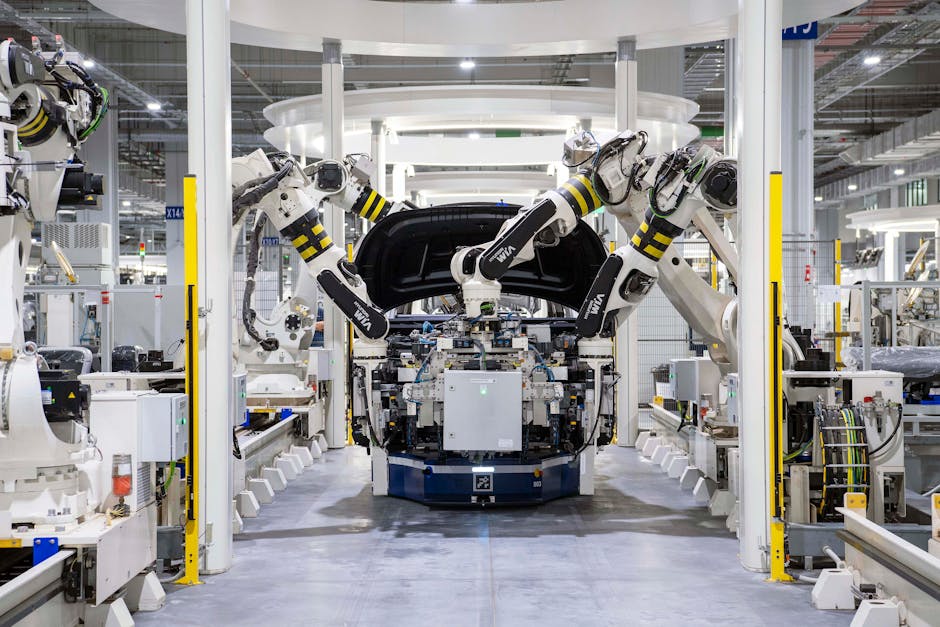
The adoption curve for Generative AI in Manufacturing has accelerated dramatically over the past eighteen months, with recent industry surveys indicating that 67% of industrial manufacturers are now piloting or deploying generative AI solutions across at least one operational domain. This represents a 340% increase from early 2024, when adoption rates hovered around 15%. The velocity of this uptake reflects both technological maturation and the pressing need for manufacturers to extract actionable insights from the vast data streams generated by sensors, PLM systems, and supply chain networks. What distinguishes current implementations from earlier AI experiments is the measurable return on investment: manufacturers report an average 23% reduction in design iteration cycles and a 31% improvement in first-pass yield rates when generative AI is integrated into quality assurance workflows.
Statistical Overview of Generative AI Adoption Across Industrial Manufacturing
Analyzing adoption patterns reveals significant variation by manufacturing sub-sector and geographic region. Discrete manufacturers—those producing distinct units like automotive components, aerospace assemblies, or industrial machinery—have embraced Generative AI in Manufacturing at higher rates than process manufacturers operating continuous production lines. Approximately 72% of discrete manufacturers with annual revenues exceeding $500 million have active generative AI initiatives, compared to 54% of process manufacturers in the same revenue bracket. This disparity stems from the nature of discrete manufacturing workflows, where CAD optimization, BOM configuration, and variant management present clear use cases for generative design algorithms.
Geographically, North American and European manufacturers lead adoption, accounting for 61% of global generative AI deployments in industrial settings. Asia-Pacific manufacturers, while representing 52% of global manufacturing output, comprise only 34% of generative AI implementations—a gap that industry analysts attribute to fragmented technology infrastructure and lower baseline digitalization in small-to-medium enterprises. However, adoption velocity in the Asia-Pacific region outpaces Western markets, with year-over-year growth rates of 89% compared to 56% in North America and 48% in Europe. Companies like Siemens and General Electric have publicly disclosed that their generative AI pilots in predictive maintenance alone have delivered $1.2 billion and $870 million respectively in avoided downtime costs over a two-year measurement period.
Quantifying Efficiency Gains and Return on Investment
The business case for Generative AI in Manufacturing rests on demonstrable improvements across three primary value dimensions: cycle time reduction, yield optimization, and asset utilization. Manufacturers implementing generative AI in production scheduling report an average 18% decrease in changeover times and a 26% improvement in OEE scores within the first twelve months of deployment. These gains emerge from AI models that analyze historical production data, identify bottlenecks in value stream mapping, and generate optimized scheduling sequences that balance throughput against resource constraints.
In the domain of design engineering, generative AI tools integrated with CAD systems enable engineers to explore thousands of design alternatives in the time previously required to evaluate a dozen options manually. Automotive suppliers using generative design for component optimization report material waste reductions of 14-22%, directly addressing the pain point of rising material costs. One tier-one supplier to a major North American automaker documented a case where generative AI proposed a suspension component redesign that reduced weight by 32% while maintaining structural integrity—a solution that human engineers had not identified after six months of traditional optimization efforts.
For manufacturers seeking to implement these capabilities, partnering with specialists in AI solution development can accelerate deployment timelines and ensure integration with existing PLM and ERP systems. The median payback period for generative AI investments in manufacturing currently stands at 14 months, with breakeven occurring fastest in predictive maintenance applications (9 months) and longest in supply chain optimization scenarios (22 months). These timelines reflect both implementation complexity and the time required to accumulate sufficient historical data for model training.
Industry Benchmarks and Performance Metrics for Production Optimization AI
Establishing meaningful benchmarks for Generative AI in Manufacturing performance requires standardized metrics that transcend individual use cases. Industry consortia have begun publishing reference architectures and key performance indicators that enable manufacturers to assess their generative AI maturity against peer organizations. Three metrics have emerged as primary benchmarks:
- AI-Driven Prediction Accuracy: The percentage of AI-generated predictions or recommendations that prove correct when validated against actual outcomes. Leading manufacturers achieve 87-92% accuracy rates in Production Optimization AI applications, compared to 73-78% for median performers.
- Time-to-Value: The elapsed time from initial data ingestion to the first actionable insight delivered by generative AI systems. Top-quartile implementations achieve time-to-value of less than 48 hours for new production scenarios, while bottom-quartile systems require 12-15 days.
- Human-AI Collaboration Efficiency: The ratio of decisions made jointly by human operators and AI systems versus decisions made in isolation. Organizations maximizing this collaboration metric report 34% higher process improvement rates than those treating AI as a fully autonomous decision-maker.
When examining Predictive Maintenance AI specifically, manufacturers have established failure prediction lead time as a critical benchmark. Industrial equipment failures typically progress through detectable degradation phases lasting 3-21 days before catastrophic failure. Generative AI systems monitoring vibration signatures, thermal patterns, and acoustic emissions now provide maintenance alerts an average of 11.3 days before failure events—sufficient lead time to schedule interventions during planned downtime rather than responding to emergency breakdowns. Honeywell disclosed that its generative AI-powered maintenance platform reduced unplanned downtime by 41% across its installed base of industrial control systems, translating to $340 million in avoided productivity losses for its customer base.
Predictive Data and Future Projections for Generative AI Growth
Market forecasts for Generative AI in Manufacturing indicate continued exponential growth, with total industry investment projected to reach $28.7 billion by 2028, up from $4.2 billion in 2025. This represents a compound annual growth rate of 61%, driven by expanding use cases beyond early adopter applications in design optimization and predictive maintenance. Emerging applications include generative AI for supplier risk assessment, dynamic capacity planning under demand uncertainty, and autonomous quality inspection using vision systems trained on synthetic defect images.
The skill gap represents both a constraint and an opportunity in this growth trajectory. Currently, only 23% of manufacturing engineers report familiarity with generative AI tools relevant to their roles, and just 11% have received formal training in AI-assisted design or production planning. Companies like Rockwell Automation and Caterpillar have responded by establishing internal AI academies that upskill existing workforces rather than competing for scarce AI talent in external labor markets. Early data from these programs indicates that experienced manufacturing engineers can achieve productive proficiency with generative AI tools in 80-120 hours of structured training—far faster than the multi-year timeline required to train data scientists in manufacturing domain knowledge.
Statistical models projecting technology diffusion suggest that Generative AI in Manufacturing will reach 50% market penetration among large manufacturers by Q2 2027, but small and medium manufacturers will lag by 24-36 months due to capital constraints and integration complexity. This bifurcation creates competitive pressure, as manufacturers achieving early-mover advantages in AI-driven efficiency gains can underprice competitors still operating with legacy processes. The data indicates that the window for strategic AI adoption remains open but is narrowing rapidly, particularly in high-mix, low-volume production environments where generative AI's ability to optimize for complexity delivers disproportionate value.
Statistical Insights on Quality Improvement and Six Sigma Integration
The intersection of Generative AI in Manufacturing with established quality methodologies like Six Sigma and TQM reveals synergies that amplify both approaches. Traditional FMEA processes rely on human experts to identify potential failure modes and assess their severity, occurrence probability, and detectability. Generative AI enhances this process by analyzing historical failure data, warranty claims, and production logs to identify failure modes that human teams might overlook and to refine occurrence probability estimates with greater statistical precision.
Manufacturers integrating generative AI into their Six Sigma programs report defect rate reductions averaging 38% beyond what traditional DMAIC (Define, Measure, Analyze, Improve, Control) methodology achieved in isolation. This improvement stems from AI's ability to detect subtle correlations between process parameters and quality outcomes across high-dimensional datasets—patterns that exceed human cognitive capacity to discern. For example, a European industrial valve manufacturer discovered through generative AI analysis that defect rates correlated with a previously unmonitored interaction between ambient humidity, curing temperature, and specific batch lots of a polymer coating—a three-way interaction that had eluded detection during years of manual quality analysis.
The data also reveals that generative AI accelerates the pace of Kaizen continuous improvement cycles. Traditional Kaizen events typically operate on weekly or monthly rhythms, bounded by the time required for human teams to propose, test, and validate process improvements. Generative AI enables what practitioners now term "continuous Kaizen"—where AI systems propose and simulate process modifications in near-real-time, with the most promising candidates surfaced to human teams for validation and implementation. Manufacturers operating continuous Kaizen report 3.2 times more process improvements implemented per quarter compared to traditional approaches, though with slightly lower average impact per improvement (8.3% efficiency gain versus 11.7% for human-led initiatives).
Conclusion: The Statistical Case for Strategic AI Investment
The quantitative evidence supporting Generative AI in Manufacturing adoption has reached a threshold where delayed investment carries measurable competitive risk. With top-quartile manufacturers realizing 23-31% efficiency improvements across multiple operational domains, the gap between AI-enabled and traditional operations continues to widen. The data demonstrates that successful implementation requires more than technology acquisition—it demands integration with existing manufacturing execution systems, alignment with Lean and Six Sigma practices, and systematic workforce development to ensure human-AI collaboration reaches its potential efficiency ratio.
For manufacturing leaders evaluating strategic technology investments, the statistical patterns are clear: generative AI delivers fastest returns in predictive maintenance and design optimization, requires 12-18 month implementation timelines to reach full productivity, and produces compounding benefits as models ingest more operational data over time. The convergence of generative AI with broader AI-Powered Business Intelligence platforms creates additional value by enabling cross-functional insights that span production, supply chain, and financial performance—transforming manufacturing from a cost center into a source of strategic advantage through data-driven decision-making at every level of the organization.


Comments
Post a Comment