Smart Manufacturing AI Myths: Debunking 12 Common Misconceptions
Despite the growing adoption of artificial intelligence across the manufacturing sector, persistent misconceptions continue to shape how organizations approach these transformative technologies. These myths, often rooted in outdated assumptions or oversimplified narratives, can lead to unrealistic expectations, misallocated resources, and missed opportunities. From exaggerated fears about workforce displacement to unfounded beliefs that AI implementations require minimal human expertise, these misconceptions create barriers that prevent manufacturers from realizing the full potential of intelligent automation. Understanding the reality behind these myths is essential for developing pragmatic strategies that align AI capabilities with actual business needs.
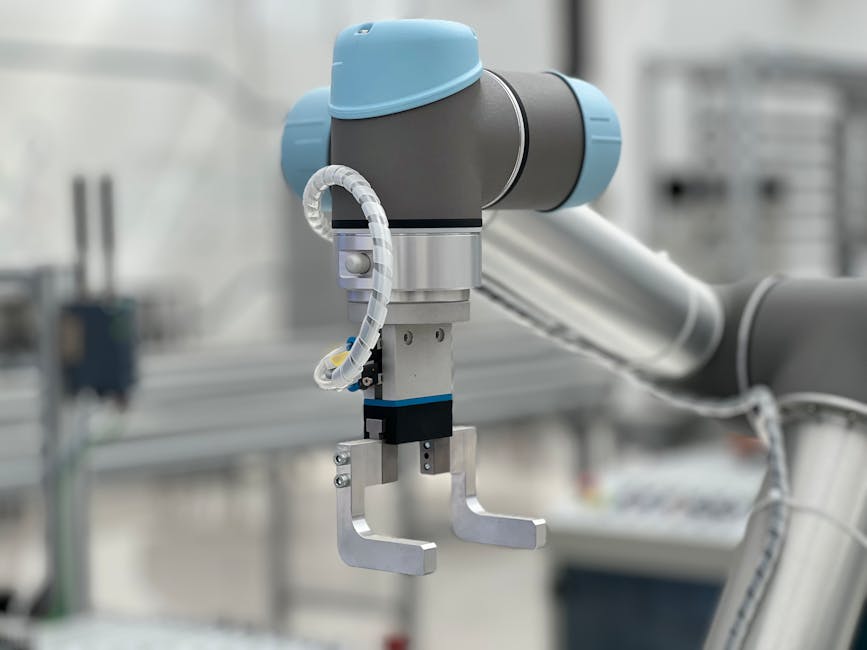
Separating fact from fiction regarding Smart Manufacturing AI enables manufacturing leaders to make informed decisions based on evidence rather than hype. This comprehensive analysis examines twelve prevalent myths, presenting the actual evidence from real-world implementations and explaining what organizations should expect when deploying AI technologies in production environments. By addressing these misconceptions directly, manufacturers can develop more realistic roadmaps that account for both the genuine capabilities and the practical limitations of current AI systems.
Myth 1: AI Will Completely Replace Human Workers on the Factory Floor
Perhaps the most persistent myth surrounding Smart Manufacturing AI is the notion that artificial intelligence will eliminate the need for human workers in manufacturing environments. This misconception stems from sensationalized media coverage and a fundamental misunderstanding of how AI systems function in practice. The reality is that successful AI implementations augment human capabilities rather than replacing them entirely. While AI excels at processing large volumes of sensor data, identifying patterns, and optimizing repetitive processes, it lacks the contextual understanding, creative problem-solving abilities, and adaptability that human workers bring to complex manufacturing environments.
Evidence from manufacturers implementing Predictive Maintenance AI demonstrates this collaborative dynamic. Maintenance technicians use AI-generated insights to prioritize inspection activities, diagnose equipment issues more quickly, and plan maintenance interventions during scheduled downtime. The AI system processes thousands of sensor readings to identify subtle anomalies that might indicate impending failures, but experienced technicians make the final decisions about when and how to intervene based on production schedules, spare parts availability, and their deep knowledge of specific equipment characteristics. Organizations like Siemens have documented that AI-enabled predictive maintenance increases technician productivity by allowing them to focus on complex diagnostic work rather than routine inspections, creating more valuable and satisfying roles rather than eliminating positions.
Myth 2: Smart Manufacturing AI Requires Massive Upfront Investment Only Large Enterprises Can Afford
Many mid-sized manufacturers delay AI adoption based on the mistaken belief that these technologies require investment levels only accessible to large enterprises. While comprehensive digital transformation initiatives can involve significant capital expenditures, organizations can achieve meaningful results through targeted pilot projects with relatively modest budgets. Cloud-based AI platforms have dramatically reduced infrastructure costs by eliminating the need for on-premises high-performance computing resources. Pay-as-you-go pricing models enable manufacturers to start small, validate business value, and scale investments based on demonstrated ROI.
A growing ecosystem of specialized solution providers offers pre-built AI models and industry-specific platforms that reduce development costs compared to building everything from scratch. Manufacturers can implement AI-powered quality inspection systems for specific production lines or deploy predictive maintenance capabilities for critical equipment without requiring enterprise-wide infrastructure upgrades. The key is identifying high-value use cases where even incremental improvements deliver measurable financial returns that justify expansion. Starting with focused pilots allows organizations to build internal expertise, refine implementation methodologies, and demonstrate value to stakeholders before committing to larger-scale deployments.
Myth 3: AI Systems Work Perfectly Right Out of the Box
Vendor marketing materials sometimes create unrealistic expectations that AI solutions can be deployed quickly with minimal customization and immediately deliver optimal performance. The reality is that effective Smart Manufacturing AI requires significant configuration, training with facility-specific data, and iterative refinement based on actual operating conditions. Generic AI models trained on aggregated industry data often perform poorly when applied to specific manufacturing environments with unique equipment configurations, process parameters, and operating practices.
Organizations must invest time in collecting representative training data that captures the full range of operating conditions, including normal operations, various failure modes, quality defects, and process variations. Data scientists must work closely with process engineers to identify relevant features, validate model outputs against domain expertise, and establish appropriate confidence thresholds. Initial deployments frequently reveal edge cases and operating scenarios not adequately represented in training data, requiring model refinement and retraining. Manufacturers should plan for multi-month implementation timelines that include data preparation, model development, pilot testing, and iterative improvement before achieving production-ready performance.
Myth 4: More Data Always Produces Better AI Results
While AI systems require substantial data for training, the simplistic notion that more data automatically produces better results overlooks the critical importance of data quality, relevance, and representativeness. Manufacturing environments generate enormous volumes of sensor data, but much of this information may be redundant, inconsistent, or irrelevant to specific AI use cases. A predictive maintenance model trained on millions of sensor readings from normal operating conditions may still fail to identify impending failures if the training dataset lacks examples of equipment degradation and failure modes.
Organizations often achieve better results by investing in smaller, carefully curated datasets that represent the full range of conditions the AI system will encounter rather than simply maximizing data volume. This includes ensuring adequate representation of abnormal conditions, quality defects, and edge cases that may occur infrequently but have significant business impact. Data quality issues including sensor calibration errors, missing values, and measurement noise can undermine model performance regardless of dataset size. Manufacturers should prioritize establishing robust data validation processes, implementing systematic data labeling for supervised learning applications, and continuously monitoring data quality rather than simply accumulating maximum data volumes.
Myth 5: AI Implementation is Purely a Technology Initiative
Treating Smart Manufacturing AI as a purely technical initiative managed exclusively by IT departments represents a common path to disappointing results. Successful implementations require deep engagement from manufacturing operations, engineering, quality, and supply chain teams who understand the business processes AI systems are intended to optimize. Technology teams can build technically sophisticated models, but without operational expertise guiding use case selection, feature engineering, and output interpretation, these models may optimize for metrics that don't align with actual business priorities.
Effective AI initiatives establish cross-functional teams where operational leaders define business objectives, identify high-value use cases, and provide the domain expertise necessary to validate that AI outputs make sense in the context of specific manufacturing processes. Process engineers contribute knowledge of equipment behavior and failure modes that guides predictive maintenance model development. Quality engineers define what constitutes actionable defects for automated inspection systems. Supply chain planners establish the constraints and objectives that guide AI-driven inventory optimization. Organizations that position AI as a collaborative initiative between technology and operations consistently achieve better adoption and business impact than those that treat it as a technology project delivered to operations teams.
Myth 6: Once Deployed, AI Models Don't Require Ongoing Maintenance
Some organizations assume that AI models, once deployed and validated, will continue performing optimally indefinitely without ongoing attention. This myth fails to account for the dynamic nature of manufacturing environments where equipment ages, processes evolve, product mixes change, and operating conditions shift over time. AI models trained on historical data gradually become less accurate as the underlying conditions they were designed to model diverge from current reality. This phenomenon, known as model drift, can silently undermine AI system effectiveness if not actively monitored and addressed.
Manufacturers must establish model performance monitoring systems that track prediction accuracy, flag anomalies, and alert data science teams when performance degrades below acceptable thresholds. Regular model retraining with recent data helps maintain accuracy as conditions evolve. Organizations should also implement feedback loops that capture the actual outcomes of AI-driven decisions and use this information to continuously improve model performance. For instance, Digital Twin Technology platforms can simulate how manufacturing processes respond to AI-recommended parameter changes before implementing them physically, creating validated feedback that enhances future recommendations. Treating AI model management as an ongoing operational responsibility rather than a one-time deployment project is essential for sustaining long-term value.
Myth 7: AI Can Optimize Processes Without Understanding Manufacturing Fundamentals
The notion that AI systems can discover optimal solutions purely from data without requiring domain knowledge embedded in their design represents a dangerous oversimplification. While machine learning algorithms can identify patterns and correlations in data, they lack inherent understanding of manufacturing physics, process constraints, and safety requirements. An AI system optimizing process parameters might recommend settings that theoretically improve throughput but violate safety limits, accelerate equipment wear, or produce out-of-specification products unless explicitly constrained by domain knowledge.
Effective Smart Manufacturing AI implementations incorporate manufacturing fundamentals through multiple mechanisms. Process engineers define feasible operating ranges that constrain AI optimization algorithms. Physics-based models of equipment behavior complement data-driven approaches, ensuring recommendations align with fundamental principles. Domain experts review AI outputs before implementation, applying contextual knowledge about factors the AI may not fully capture. Organizations developing solutions through comprehensive AI development frameworks can embed manufacturing expertise directly into model architectures, validation processes, and deployment workflows. This combination of data-driven insights and domain expertise produces more reliable and actionable results than purely algorithmic approaches.
Myth 8: Cloud-Based AI Solutions Pose Unacceptable Cybersecurity Risks
Some manufacturing organizations resist cloud-based AI platforms based on concerns that transmitting operational data to external systems creates unacceptable cybersecurity and intellectual property risks. While these concerns warrant serious consideration, they often reflect outdated assumptions about cloud security architectures rather than current capabilities. Leading cloud platforms implement security controls including encryption, access management, network isolation, and compliance certifications that frequently exceed the capabilities of on-premises systems, particularly at mid-sized manufacturers with limited IT security resources.
The security question should focus on implementing appropriate architectures rather than categorically avoiding cloud platforms. Hybrid approaches enable sensitive real-time operations to run on edge computing infrastructure within the factory while leveraging cloud resources for model training, long-term analytics, and centralized management. Data anonymization and aggregation techniques can protect intellectual property while still enabling AI model development. Organizations should conduct thorough risk assessments that evaluate specific cloud platforms against their security requirements rather than making decisions based on generalized fears. Many manufacturers discover that properly configured cloud AI platforms actually improve their security posture compared to fragmented on-premises systems with inconsistent security controls.
Myth 9: AI Will Solve Data Quality Problems Automatically
Organizations sometimes approach AI implementation believing that sophisticated algorithms will automatically compensate for poor data quality, filling gaps and correcting errors through statistical inference. This myth leads to inadequate investment in data governance and quality improvement, resulting in AI systems trained on flawed data that produce unreliable outputs. The data science principle of "garbage in, garbage out" applies forcefully in manufacturing AI applications where decisions based on incorrect predictions can impact production efficiency, product quality, and equipment safety.
Manufacturers must address data quality systematically before and during AI implementation. This includes calibrating sensors regularly, validating measurement accuracy, implementing data validation rules that flag implausible values, and establishing clear data ownership and stewardship responsibilities. Organizations should audit data quality across source systems, identifying and remediating systematic issues before using information for AI training. While some AI techniques can handle limited amounts of missing data or measurement noise, they cannot overcome fundamental quality problems. Investing in data quality improvement delivers benefits beyond AI applications, enhancing the reliability of reporting, decision-making, and process control across manufacturing operations.
Myth 10: Smart Manufacturing AI Delivers ROI Immediately After Implementation
Unrealistic expectations about the timeline for achieving return on investment represent another common source of disappointment with AI initiatives. While proof-of-concept demonstrations may show impressive results in controlled conditions, translating these capabilities into sustained business value requires time for user adoption, process integration, and continuous optimization. Initial deployments often uncover integration challenges, data quality issues, and change management requirements that extend timelines beyond initial projections.
Organizations should establish realistic expectations that meaningful ROI typically emerges over quarters rather than weeks. Early phases focus on validating technical feasibility, building user confidence, and refining models to perform reliably under actual operating conditions. Value accumulates as users learn to incorporate AI insights into their workflows, as models improve through retraining with operational data, and as successful pilots expand to additional equipment or production lines. Manufacturers that communicate these realistic timelines to stakeholders and celebrate incremental progress toward long-term objectives maintain better organizational support than those that overpromise immediate results and lose credibility when reality fails to match expectations.
Myth 11: AI Requires Replacing All Existing Manufacturing Systems
Some organizations delay AI adoption based on the mistaken belief that implementing these technologies requires replacing existing manufacturing execution systems, enterprise resource planning platforms, and operational technology infrastructure. This myth dramatically overstates the prerequisites for getting started with Smart Manufacturing AI and ignores the integration capabilities of modern platforms. While legacy systems may present integration challenges, they rarely require wholesale replacement as a prerequisite for AI implementation.
Modern Industrial IoT Solutions and integration middleware enable AI platforms to connect with existing systems through standard industrial protocols, APIs, and data export mechanisms. Organizations can deploy AI capabilities that complement existing infrastructure, consuming data from multiple source systems and feeding insights back into established workflows. A predictive maintenance AI system, for instance, can analyze data from existing sensors and control systems while integrating maintenance recommendations into the current computerized maintenance management system. Starting with integration-focused architectures allows manufacturers to realize AI value while preserving investments in existing systems and migrating to modern platforms strategically over time rather than requiring disruptive forklift upgrades.
Myth 12: AI Success Stories from Other Industries Translate Directly to Manufacturing
Manufacturers sometimes approach AI adoption with expectations shaped by success stories from consumer internet companies, financial services, or retail sectors, assuming these results will translate directly to industrial environments. While AI techniques like machine learning and neural networks apply across industries, the specific challenges of manufacturing environments create unique requirements that generic approaches may not address effectively. Manufacturing AI must operate reliably in harsh physical environments with temperature extremes, vibration, and electromagnetic interference that would disable consumer-grade hardware. Real-time decision-making requirements measured in milliseconds differ fundamentally from batch-oriented analytics common in other sectors.
Industrial processes generate time-series data with complex temporal dependencies quite different from the transaction-based data prevalent in financial services or the image and text data driving consumer AI applications. Equipment failures and quality defects that represent critical use cases for manufacturing AI occur relatively infrequently, creating imbalanced datasets that require specialized handling. Safety-critical applications demand explainability and validation rigor beyond what suffices for product recommendations or targeted advertising. Manufacturers should seek AI solutions and expertise specifically tailored to industrial environments rather than assuming that general-purpose platforms or practitioners without manufacturing domain knowledge will deliver equivalent results.
Conclusion
Dispelling these common myths enables manufacturing leaders to develop realistic strategies for Smart Manufacturing AI adoption that account for both the genuine capabilities and practical limitations of current technologies. Success requires moving beyond simplistic narratives about AI as either a miraculous solution to all operational challenges or an unaffordable luxury accessible only to technology giants. The evidence from real-world implementations demonstrates that thoughtfully designed AI initiatives, properly scoped and resourced, can deliver measurable improvements in equipment reliability, product quality, process efficiency, and supply chain performance across manufacturers of all sizes. These results emerge not from deploying AI in isolation but from integrating intelligent systems into comprehensive digital transformation strategies that address data infrastructure, organizational capabilities, and change management alongside technology deployment. Manufacturing organizations ready to move beyond myths and develop evidence-based AI strategies should explore proven AI Transformation Services that bring industry-specific expertise and realistic implementation methodologies to ensure investments deliver sustained business value rather than becoming expensive lessons in unfulfilled expectations.


Comments
Post a Comment